Activist Investors Exploit Idle Corporate Cash Reserves in Japan
When an activist investor targets a legacy corporation, financial media instinctively frames the event as a battle of philosophies: short-term financial engineering versus long-term stakeholder capitalism.
Set that narrative aside. To understand what is actually happening at Sanyo Shokai—a storied Japanese apparel manufacturer currently under siege by activist shareholders—we need to look at the balance sheet as an engine schematic and ask a single question:
Whose cash flow improves here?
The Frictionless Extraction
Sanyo Shokai’s balance sheet carries a striking anomaly: cash and liquid deposits account for roughly 40% of its total assets, while the company trades below its book value (PBR < 1).
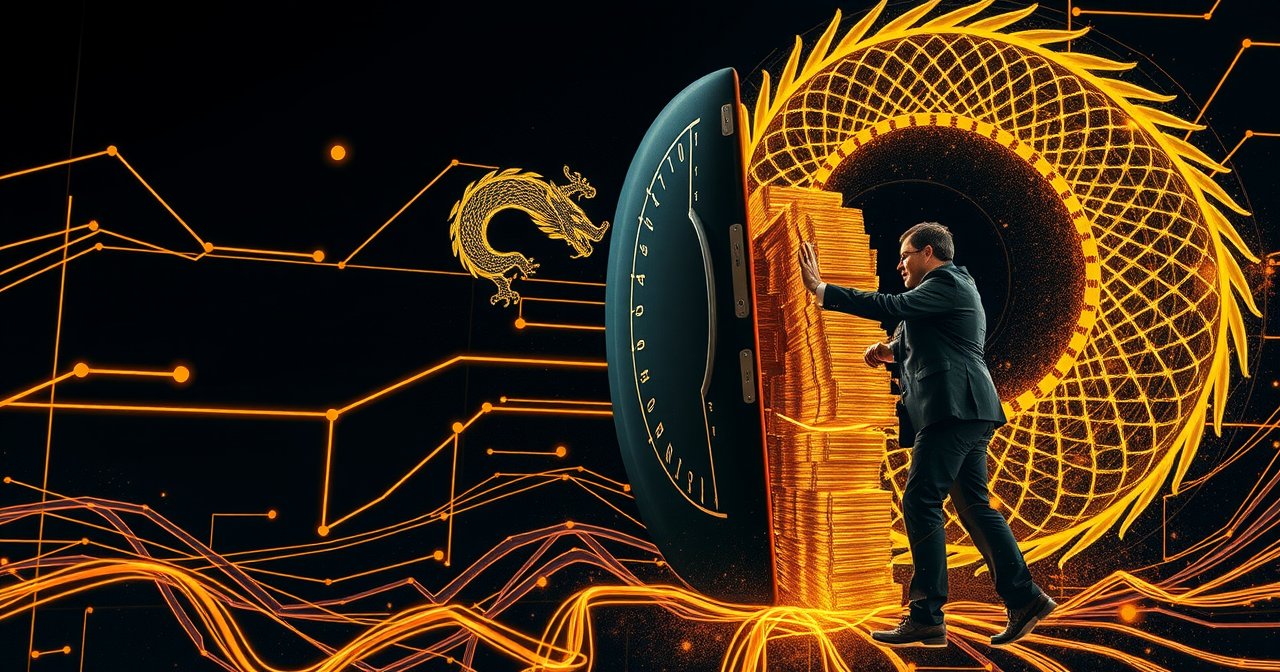
To an activist fund, this is not an operating company that makes clothes. It is an unlocked safe disguised as a business.
The activist’s cash flow improves with near-zero operational friction. Revitalizing a heritage apparel brand in a saturated domestic market requires immense risk: renegotiating retail department store leases, forecasting seasonal fashion trends eighteen months out, overhauling supply chains, and absorbing inventory write-downs.
Demanding that management distribute its cash hoard via dividends and share buybacks requires none of that. It bypasses supply chains, factory utilization rates, and retail foot traffic entirely. The activist extracts pure capital, collects the arbitrage between the depressed equity price and the underlying cash, and exits. The payout is mathematical, swift, and clean.
The losers in this equation are equally clear.
When cash reserves leave the balance sheet to satisfy capital efficiency metrics, the financial ratio known as Return on Equity (ROE) mechanically improves. But the business itself shrinks. The capital being drained is the exact buffer required to absorb the friction of product development, store renovations, and supply chain digitalization. The employees who design garments and manage floor operations lose the capital backing needed to reinvent their product. The customer loses any chance of seeing the brand modernize.
Why Now?
Cash hoarding among mid-tier Japanese manufacturers and retailers is hardly news. Sanyo Shokai has held excess cash for years. Why did the pressure culminate now?
Two institutional variables crossed a threshold.
First, the Tokyo Stock Exchange (TSE) made corporate governance pressure operational rather than symbolic by explicitly demanding that listed companies trading below book value disclose specific cost-of-capital improvement plans. Second, Japan’s domestic macro environment shifted from entrenched deflation to inflation.
In a zero-interest, deflationary environment, sitting on cash is defensible; its purchasing power quietly increases. Under inflation, idle cash is an active, unhedged operational loss. Activists did not suddenly uncover an obscure structural flaw—they exploited a regulatory window that rendered the company’s defensive stance legally and socially indefensible.
The Constraint Behind the Hoard
The immediate reaction among commentators is to label management “incompetent” or “financially illiterate.” But corporate executives rarely act out of sheer stupidity; they act to survive within their incentive structure. To understand why Sanyo Shokai’s leadership let cash accumulate to 40% of total assets, one must look at the constraints governing their careers.
A decade ago, Sanyo Shokai suffered a catastrophic blow when its long-standing licensing contract for a major global luxury brand was terminated. The company plunged into deep operating deficits. Management spent years executing painful cost-cutting: shuttering flagship stores, reducing headcount, and eliminating product lines to claw their way back to operating profitability.
That trauma shaped an unspoken internal metric.
In Japanese corporate hierarchy, making a capital expenditure that fails—such as launching an ambitious in-house brand or acquiring an overseas design house—triggers an accounting impairment (genson). An impairment is a visible, recorded failure that attaches directly to the executive who sponsored it.
Conversely, leaving money in a low-yield commercial bank account produces no line-item disaster. Even if inflation erodes its real value, or opportunity cost drains the company’s future, no individual manager is penalized on their annual review for an investment they didn’t make.
The cash hoard was never an asset for future growth. It was an organizational shield. Management turned the operating company into a storage locker to eliminate career-ending downside risk.
Physics, Costs, and Institutions
Capital within an operating company is not static wealth; it is stored kinetic energy.
In apparel, the physics of business are unforgiving. You purchase fabric, contract garment factories, ship containers across oceans, lease high-traffic retail square footage, and pay store clerks months before a single unit generates revenue. The working capital cycle is a long, vulnerable lever. If inventory turns stall, cash flow collapses.
When a company freezes that kinetic energy into deposits, it breaks the feedback loop between capital deployment and customer value. Operating expense cuts can restore a profit margin temporarily, but margin expansion without top-line reinvestment hits an asymptotic limit. Once you have closed every unprofitable store, you must create something people will pay full price for.
Sanyo Shokai reached that physical limit. By refusing to cycle its capital back through the working-capital loop to create new operating assets, it left its cash isolated on the asset side of the ledger. And capital that does not move invites external forces to move it.
Falsification
This analysis rests on the premise that management’s risk aversion has permanently compromised its capacity to allocate capital toward productive growth, leaving liquidation-via-shareholder-return as the only path of least resistance.
This hypothesis is proven wrong if the following data appears:
- Sanyo Shokai’s management rejects the activist’s payout demands and instead commits more than 50% of its cash reserves to a major, verifiable strategic initiative (such as an overseas direct-to-consumer acquisition or a total supply chain overhaul);
- And that deployed capital generates an operating margin improvement of at least 300 basis points within eight quarters.
If those metrics emerge, the accumulated cash was genuinely a patient, strategic reserve. If they do not, the cash was precisely what it appeared to be: inertia.
Conclusion
The dynamic playing out at Sanyo Shokai is a case study in how risk-averse management paradoxically manufactures its own destruction.
Who benefits? Activist funds and opportunistic capital, who gain immediate, low-risk liquidity at the expense of corporate continuity.
Who loses? The operational workforce and long-term brand equity, both of which are liquidated to balance an equity ratio.
The broader shift in the market is structural. Mid-cap Japanese equities with high net-cash ratios and sub-1.0 PBRs are no longer being evaluated as going concerns. The market is pricing them based on their liquidation value. Capital is flowing away from legacy manufacturing and retail operators unable to deploy their own balance sheets, and redirecting toward asset-light platforms or external funds that specialize in balance-sheet disassembly.
Disclosing the Standpoint
I spend my working days as an automotive systems engineer, mapping powertrain transitions and calculating development expenditure against strict decade-long product roadmaps.
In my environment, the temptation to avoid risk is everywhere. Designing a clean-sheet propulsion architecture carries immense personal and institutional downside; defending legacy designs costs less reputational capital in the short term. It is always easier to optimize a declining baseline than to commit billions to an uncertain frontier.
When I look at Sanyo Shokai’s balance sheet, I do not see an apparel story. I see the terminal phase of an organization that prioritized the comfort of inaction over the risk of value creation. When an engineering team stops spending its budget on test benches and tooling, it does not become efficient—it becomes obsolete. A company that treats cash as an insurance policy against making decisions will eventually find someone else willing to make the decisions for them.
— Garryu
Source: 投資を恐れる管理職が自社を金庫に変える構造 | 日本経済新聞 https://www.nikkei.com/article/DGXZQOUC278KD0X20C26A5000000/